
Trump’s Daily War Briefing Is a Two-Minute Montage of Explosions

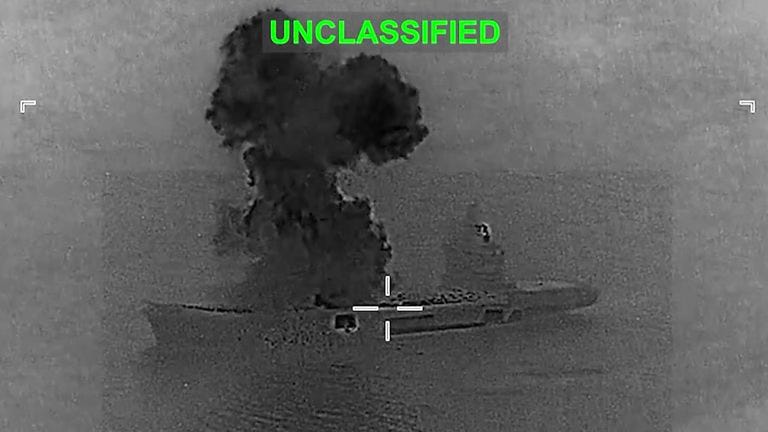
The big picture: The U.S. sent Iran a 15-point peace plan via Pakistan. Trump claims Iran has largely agreed to it. Iran officially rejected it, called it “excessive,” mocked Trump for “negotiating with himself,” and laid out its own five conditions. Also NBC News is reporting that one of Trump’s primary war updates is a daily two-minute montage of successful strikes, with officials worried he’s not seeing the full picture.
Why it matters: The president is making decisions about a war involving 20+ countries while getting briefed through highlight reels. Iran has twice been attacked during active negotiations under Trump and says it “doesn’t want to be fooled again.” You have 7,000 additional troops deployed, the Pentagon on “wartime footing,” and a peace plan that one side says is nearly done while the other says doesn’t exist.
The plan: Sent through Pakistan. Calls for dismantling three nuclear sites, ending enrichment, suspending ballistic missiles, curbing support for regional allies, and reopening the Strait of Hormuz. In return: sanctions relief and civilian nuclear assistance. U.S. envoy Witkoff reportedly told Trump that Iran agreed to give up enriched uranium. BUT it was never clear whether anyone with actual authority made that commitment, according to Axios.
Iran’s response: Officially rejected the proposal, calling it “excessive.” Laid out five conditions: end attacks and assassinations, create mechanisms to prevent resumption, pay compensation for damages, and recognize Iran’s authority over the Strait. A military spokesperson mocked Trump on state TV, saying “Has the level of your inner struggle reached the stage of you negotiating with yourself?”
Iranian officials told mediators they “don’t want to be fooled again,” referring to the U.S. attacking during active talks twice under Trump, according to Axios.
The Strait “gift”: Trump claimed Iran gave the U.S. “a very big present worth a tremendous amount of money” that was “oil and gas-related.” Iran sent a letter to the UN’s maritime organization claiming “non-hostile” ships can pass through the Strait. BUT Iran defined nonhostile as vessels that don’t support aggression against Iran or belong to the U.S. or Israel. Analysts say this is unlikely to encourage major shipping operators.
The military reality: 2,000 more troops deploying, bringing the total to ~7,000 additional since the war began. Defense firms boosting munitions on “wartime footing.” Enlistment age raised from 35 to 42. Drug conviction restrictions loosened. White House confirmed operations “continue unabated.” A Trump adviser told Axios: “Trump has a hand open for a deal and the other is a fist, waiting to punch you in the f***ing face.”
The sizzle reel: NBC News reports Trump receives a daily two-minute montage of the biggest, most successful strikes. One official described it as clips of “stuff blowing up.” Officials say briefings emphasize military successes and give relatively little time to Iranian actions. Trump wasn’t briefed on an Iranian strike that hit five American refueling planes in Saudi Arabia, only learning about it from media coverage. Joe Kent, the intelligence official who resigned, told Tucker Carlson that key decision-makers were shut out and “there wasn’t a robust debate.”
The regional chaos:
Kuwait — drone hit fuel tank at international airport, fire erupted
Saudi Arabia — 30 drones intercepted since yesterday
UAE — 9 drones intercepted today
Iraq — 7 soldiers killed, 13 injured in strike on PMF base; PM summoned U.S. diplomat
Iran fired cruise missiles at USS Abraham Lincoln; Trump claims 100+ missiles intercepted total
By the numbers:
15 — points in the U.S. peace proposal
5 — conditions in Iran’s counter-demands
7,000 — additional U.S. troops deployed since war began
2 — minutes in Trump’s daily war highlight reel
2 — times U.S. has attacked Iran during active negotiations under Trump
100+ — missiles Trump claims were fired at the USS Abraham Lincoln
5% — oil price drop on news of the plan (to $99/barrel)
The bottom line: The president says the deal is almost done, Iran says no deal exists, the military is growing while the White House talks peace, AND the person making every decision is getting his war updates from a two-minute highlight reel of explosions while officials worry he’s missing the full picture. Iran has been burned twice by negotiating with this president. The troops keep deploying. The chaos makes a lot of sense when you understand how the briefings work. It’s also exactly why it should make everyone nervous.
NBC News | Axios | Associated Press | The New York Times | Bloomberg
Thanks for reading! Comment your thoughts & reactions | Share to spread the word | Follow to stay in the loop
Many years ago I served in the US Army. I served in both Iraq and Afghanistan. I can say without reservation that if we send troops into Iran, everything that happened over the course of 20 years will take its toll in just under 5. It won't just affect the United States, but the world over.
The sizzle reel detail is the most important thing in this piece, and not just because it's alarming. It explains a specific policy error that's about to matter a lot.
A two-minute montage of successful strikes shows a war being won. What it doesn't show is that Iran's attack rate has increased every week, that the IRGC is collecting transit fees from commercial shipping through a corridor the US military hasn't disrupted, or that Qatar's Ras Laffan LNG terminal has 3-5 years of repair ahead regardless of any ceasefire. A highlight reel of explosions cannot convey the distinction between destroying a navy and losing control of a chokepoint — which is what's actually happened.
The March 28 deadline expiry is 48 hours away. That decision requires understanding that Iran's five counter-conditions aren't a rejection — they're structured positional bargaining from the civilian Foreign Ministry. But it also requires understanding that the IRGC military command is simultaneously calling the entire talks narrative a plot, and fortifying Kharg Island against an occupation scenario. Those two signals demand completely different responses. A sizzle reel briefing can't distinguish between them, and a president who doesn't see that distinction is about to make a decision that determines whether this war lasts weeks or months.